Add Row
Add Element
cropper
update
Better Living Okanagan
update
Add Element
  • Home
  • Categories
    • Healthy Living
    • Okanagan Life
    • Gardening Tips
    • Community Events
    • Home & Living
    • Modern Economy
    • Technology & Innovation
    • Travel
    • Sustainability
    • Recreation
June 04.2025
3 Minutes Read

How B.C.'s New Law Affecting MLAs Sparks Community Concerns

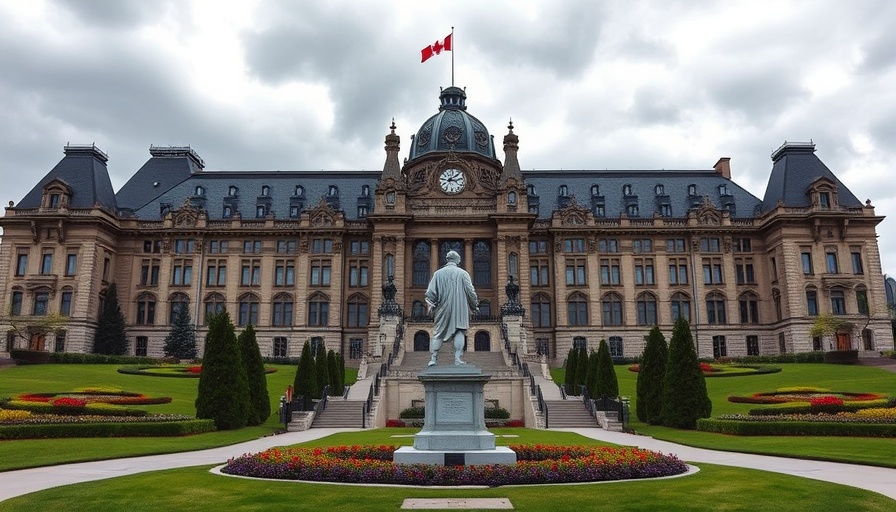
B.C. parliament building with statue foreground and Canadian flag displayed.

New B.C. Law Sparks Debate on Local Governance

The recent passage of the Eligibility to Hold Public Office Act by the New Democratic Party (NDP) government in British Columbia marks a significant shift in the landscape of local governance. Under this law, no Member of the Legislative Assembly (MLA) is permitted to simultaneously hold a position in local government, a change that is met with pushback from the BC Conservative Party, particularly from MLAs with dual mandates.

What the Law Entails and Its Immediate Impact

This legislation forces sitting MLAs, such as Misty Van Popta and Korky Neufeld, to resign from their local government positions if they wish to remain in the provincial legislature. This is particularly contentious as both MLAs have argued that their dual roles serve their constituents effectively. Van Popta emphasized this point during her interactions with voters, stating that she was transparent about her intentions in holding both offices temporarily to avoid triggering costly byelections. Yet, her constituents and local issues could suffer as the law eliminates the option for current representatives to fulfill such dual roles.

The Conservatives' Response: Claims and Counterarguments

Van Popta and Neufeld feel that the NDP has specifically targeted them through this legislation, aiming to demolish their political careers and diminish Conservative influence in municipal governance. Critics of the law argue that it fundamentally undermines local representation because a combined understanding of both provincial and local issues can enhance the support provided to constituents.

In response, the NDP maintains that the new law promotes accountability and ensures that legislators can focus on their provincial roles without the distractions of local office. This narrative of accountability is particularly poignant as public trust in political institutions waxes and wanes. However, the lack of this flexibility raises questions about representation, especially in smaller municipalities where dual roles have been customary.

Public Opinion: A Mixed Bag

Public opinion seems divided on this issue. Some community members express support for the legislation, arguing it is about time to prioritize government integrity and concentrate the efforts of elected officials in respective roles. Others, however, see it as an unnecessary burden on political practices that have operated effectively over time.

An engagement with local community leaders shows that this law could lead to complications in how governance is managed at the local level. For example, the disappearance of an MLA with intimate knowledge of regional concerns might lead to misunderstandings or neglect of local priorities in the provincial agenda.

Historical Context: Dual Mandates in Government

Historically, holding dual mandates is not a new concept in British Columbia or Canada more broadly. This practice allowed for a melding of local and provincial governance, often deemed beneficial during municipal budget planning and crisis management. Not only were MLAs able to represent local interests in provincial discussions, but their involvement led to more nuanced perspectives on local issues brought to the legislative floor.

What Lies Ahead: Future Predictions and Political Landscape Changes

As the BC Conservatives rally against this law, it may create a schism in the political landscape. It’s crucial to observe how the newly instituted regulations will affect the dynamics of local funding, advocacy for district projects, and the overall efficiency of provincial decision-making processes. If the law results in heightened friction between local and provincial politics, it could lead to broader changes, such as reevaluating the legislative power balance in BC.

Community Reaction and the Importance of Engagement

This legislative change encourages active community engagement and discussions on local governance practices. Citizens are urged to communicate their thoughts and concerns to their representatives actively. Whether in support or opposition, these dialogues will shape future governance as public officials reconsider the necessity and effectiveness of new laws regulating the eligibility of public office-holders.

As British Columbia continues to navigate this important change, communities must remain both informed and engaged to ensure their voices influence the evolving political dynamics.

Okanagan Life

6 Views

0 Comments

Write A Comment

*
*
Please complete the captcha to submit your comment.
Related Posts All Posts
03.30.2026

Could B.C. Fuel Crisis Inspire Permanent Work-from-Home Policies?

Update The Strain of Rising Fuel PricesAs fuel prices soar in British Columbia, one of the province's largest unions, the BC General Employees Union (BCGEU), is advocating for a shift towards remote work to lighten the financial burden on workers. Fuel costs have recently experienced a significant hike due to tensions in the Middle East, particularly related to the ongoing war in Iran, which has reverberated globally, affecting oil prices. In Metro Vancouver, residents are now facing fuel costs nearing $2 per liter, placing a strain not only on individual finances but also on the economy at large.A Call for Flexible Work ArrangementsBCGEU President Paul Finch stated that employees should be allowed to work from home full-time when feasible. By doing so, the union believes they can help conserve fuel, mitigate emissions, and relieve workers' financial stress at the gas pump. "The provincial government has an opportunity to help alleviate that burden by allowing workers the flexibility to work from home," Finch explained. This sentiment echoes similar calls from the Canadian Association of Professional Employees (CAPE) for governments to adopt the International Energy Agency’s recommendations aimed at curtailing demand for oil and gas.The Broader Impact of Remote WorkNot only would remote work present financial relief, it also has environmental implications, such as reducing vehicle emissions and traffic congestion. In a world increasingly focused on sustainability, this push towards hybrid work models offers a dual benefit—addressing the immediate concerns of workers while aligning with long-term ecological goals. In fact, a more flexible working environment has been shown to enhance productivity and employee satisfaction, creating a workforce that is both happy and efficient.Comparative Analysis with Other ProvincesWhile some provinces, such as Manitoba and New Brunswick, maintain flexible hybrid work rules for government employees, others have mandated a return to the office. For instance, Ontario public sector employees are expected back to in-office, five days a week, by January 5. Alberta has also reverted to full-time office work as of February, arguing that it will enhance collaboration and service delivery. The contrasting policies highlight the need for a balanced approach that considers both operational effectiveness and the current economic realities faced by employees.Immediate Relief for Essential WorkersRecognizing that many workers, especially those in home support and community outreach roles, may have limited transport options amid high fuel prices, the BCGEU is also urging the provincial government to explore temporary relief measures. This could involve providing assistance to these essential workers who travel extensively for their roles, ensuring they do not have to bear the brunt of rising costs alone.The Future of Work Post-PandemicThe COVID-19 pandemic has fundamentally changed our perspective on remote work. Many companies have adopted new models that allow for greater flexibility, and the BCGEU's current ask reflects a permanent shift rather than a temporary adjustment. As businesses and governments navigate the post-pandemic landscape, considering worker welfare and environmental sustainability must be integral to policy decisions.Conclusion: A Call for ActionIn summary, as fuel prices continue to pressure the wallets of everyday British Columbians, the call for remote work represents a crucial step towards mitigating not just economic strain but also environmental degradation. The BCGEU’s advocacy emphasizes a holistic approach to current challenges, and as other provinces observe these shifts in policy, it will be interesting to see how flexible work arrangements evolve across Canada.Given the urgency of the situation, now is the time for both the government and businesses to act on these recommendations for the benefit of workers and the environment alike.

03.29.2026

Calgary Flames’ Scoring Surge: How They Defeated the Canucks 7-3

Update Calgary Flames on Fire: A Dominant Victory Over VancouverOn a night where the Calgary Flames lit up the scoreboard, they scored a striking 7-3 victory against the Vancouver Canucks, showcasing their newly found offensive prowess. Matt Coronato was a standout, extending his point streak to five games with a goal and two assists, as the Flames powered through, scoring four goals in the second period alone, much to the delight of the home crowd at the Saddledome.Calgary’s offensive performance is a drastic turnaround for a team that struggled throughout the season, averaging just 2.47 goals per game—the lowest in the NHL. This sharp spike in scoring comes at a crucial time as the Flames prepare for a challenging six-game road trip, starting with the league-leading Colorado Avalanche. With this win, they ended their six-game homestand with an impressive 5-0-1 record.Key Performers Fueling Flames’ SuccessJoining Coronato in the spotlight, Morgan Frost also contributed significantly with a goal and two assists. Their chemistry on the ice has led to an uptick in scoring, which Flames fans hope will continue moving forward. Olli Maatta, recently acquired at the trade deadline and known for his scoring capacity, scored yet again, marking ten points in just twelve games since his arrival—showing that perhaps a change of scenery was all he needed.The Flames bathed in offensive opportunities, with significant contributions from Zayne Parekh, who netted his first career multi-point game, and Adam Klapka, whose own scoring efforts added to the Flames’ dominating performance. Meanwhile, goalie Dustin Wolf kept Vancouver's efforts at bay, making 31 saves to secure his third consecutive victory.The Canucks’ Struggles ContinueOn the other hand, the Vancouver Canucks are facing their own challenges. This latest defeat marks their fifth consecutive loss, further cementing their position at the bottom of the standings. Nils Hoglander, Jake DeBrusk, and Liam Ohgren each found the back of the net, but individual efforts were not enough to salvage a win against the spirited Flames. Goalie Nikita Tolopilo had a difficult night, pulled from the game after conceding four goals on just eleven shots.The Canucks' struggles have raised concerns among fans as they inch closer to clinching last place. With ten games left on their schedule, they find themselves 17 points behind the next teams in line, indicating a challenging path ahead. Vancouver now looks to rebuild and find synergy as they try to navigate through the remaining season.What’s Next for Both Teams?For Calgary, the upcoming matchups will test whether their scoring touch can withstand the rigorous demands of a playoff push. As they embark on their road trip, they face not only the Colorado Avalanche but also a series of formidable opponents, including the Vegas Golden Knights and the Dallas Stars—teams that have shown strength this season.The Flames are hoping that their recent success can build the momentum needed to challenge for a playoff spot, even if that means giving up a chance at a high draft pick, a topic that brings mixed feelings among the fan base.Analysis: Turning Points and Future PredictionsThe Flames’ unexpected resurgence following a challenging start leaves fans wondering about the sustainability of this energy as they enter the final stretch of the season. Trade acquisitions like Morgan Frost and Olli Maatta played stabilization roles, proving that timely adjustments can yield immediate results on the ice. If they can maintain their current form, the Flames could challenge for a playoff position unexpectedly.Meanwhile, the Canucks must reflect on their strategic structure moving forward, with many fans calling for a renewed focus on rebuilding gameplay systems and player development as they look to exit their difficult season.The upcoming weeks will prove crucial for both teams, where outcomes could lead to reshuffling in trades or a more significant focus on developing young talent, illustrating the dual-edged sword of NHL competition.Final ThoughtsThe Flames’ 7-3 victory not only highlights their improved scoring but also raises the stakes for their upcoming matchups, while the Canucks need to reassess their strategies and reposition for the next season. As the playoffs loom on the horizon, one thing remains clear: fast-paced, exciting hockey is on the minds of fans in Calgary.

03.28.2026

Penticton's Homeless Camp Eviction Postponed: Community Divided on Solutions

Update Eviction Delay Brings Mixed Emotions to Penticton The recent postponement of the eviction application for the homeless encampment located along Highway 97 in Penticton has left the community grappling with mixed emotions. Residents, local businesses, and advocates have expressed a range of views about the impact of this decision, highlighting the complexities of addressing homelessness. Understanding the Concerns: Safety and Community Impact At the heart of the grievance are safety concerns—both for the encampment’s residents and for local businesses. Nearby business owners have reported frequent fires in the encampment, including a notable incident that spread to the Leisureland RV Centre last year, destroying two trailers. Luke Bradley, a truck sales consultant, voiced his frustration, stating, "They’ve been there for two-and-a-half years, almost three years, and it’s just progressively gotten worse and worse.” Such sentiments echo the narrative of growing unease in the community over safety associated with the encampment. The Struggles of the Homeless: A Human Perspective Amidst the concerns for safety, individuals living in the encampment, like Ernest John, express their vulnerability. “I do have a certain fear of being forced to do something and move,” he remarked. The anxiety of where to go next weighs heavily on those living in precarious conditions. With no clear solution, the postponement of the eviction may provide a temporary reprieve, but it leaves questions unanswered about the future wellbeing of these individuals. Frustration Across Perspectives: A Divided Community This situation highlights a broader societal challenge—the difficulty in finding a balanced approach to homelessness. While businesses push for action due to their fears concerning safety and property values, advocates emphasize the need for understanding and compassion for those facing homelessness. The interconnectedness of these issues leads to a poignant reality: the solution requires a collaborative approach that prioritizes community safety while also preserving the dignity of its most vulnerable members. Future Predictions: Seeking a Balanced Solution Looking ahead, the postponed court date may serve as an opportunity for local leaders and community members to engage in meaningful dialogue regarding homelessness. Potential solutions could include creating transitional support systems that offer individuals a pathway to stable housing, aligning resources to address safety concerns, and developing community-led initiatives to encourage public engagement regarding homelessness. The Role of Local Organizations Organizations like the Penticton and Area Access Centre strive to promote equal access and support for those in need. Their role could be vital in fostering relationships between residents and local businesses, advocating for collaborative community solutions. The ongoing need for resources to support mental health and addiction issues within the homeless population cannot be overstated; addressing these root problems is essential for sustainable solutions. Calls for Change: A Community Effort Needed The postponement of the eviction hearing offers a moment for reflection within the Penticton community. The need for unity in addressing homelessness is pressing. As individuals, businesses, and advocates share their perspectives, it’s clear that coming together to formulate constructive strategies is imperative. Working collaboratively can pave the way for innovative solutions that benefit all parties involved. Conclusion: Embracing a Comprehensive Approach The ongoing saga of the Penticton homeless encampment presents a nuanced and complex issue that affects the entire community. From the uncertainties faced by residents to the frustrations felt by businesses, the dialogue surrounding homelessness is elemental to fostering a harmonious community. Seeking solutions that prioritize safety while uplifting the vulnerable is a goal worth striving for.

Terms of Service

Privacy Policy

Core Modal Title

Sorry, no results found

You Might Find These Articles Interesting

T
Please Check Your Email
We Will Be Following Up Shortly
*
*
*